【Case Study】Market Research and Market-Entry Support Exploring the Potential of Vietnamese Cacao
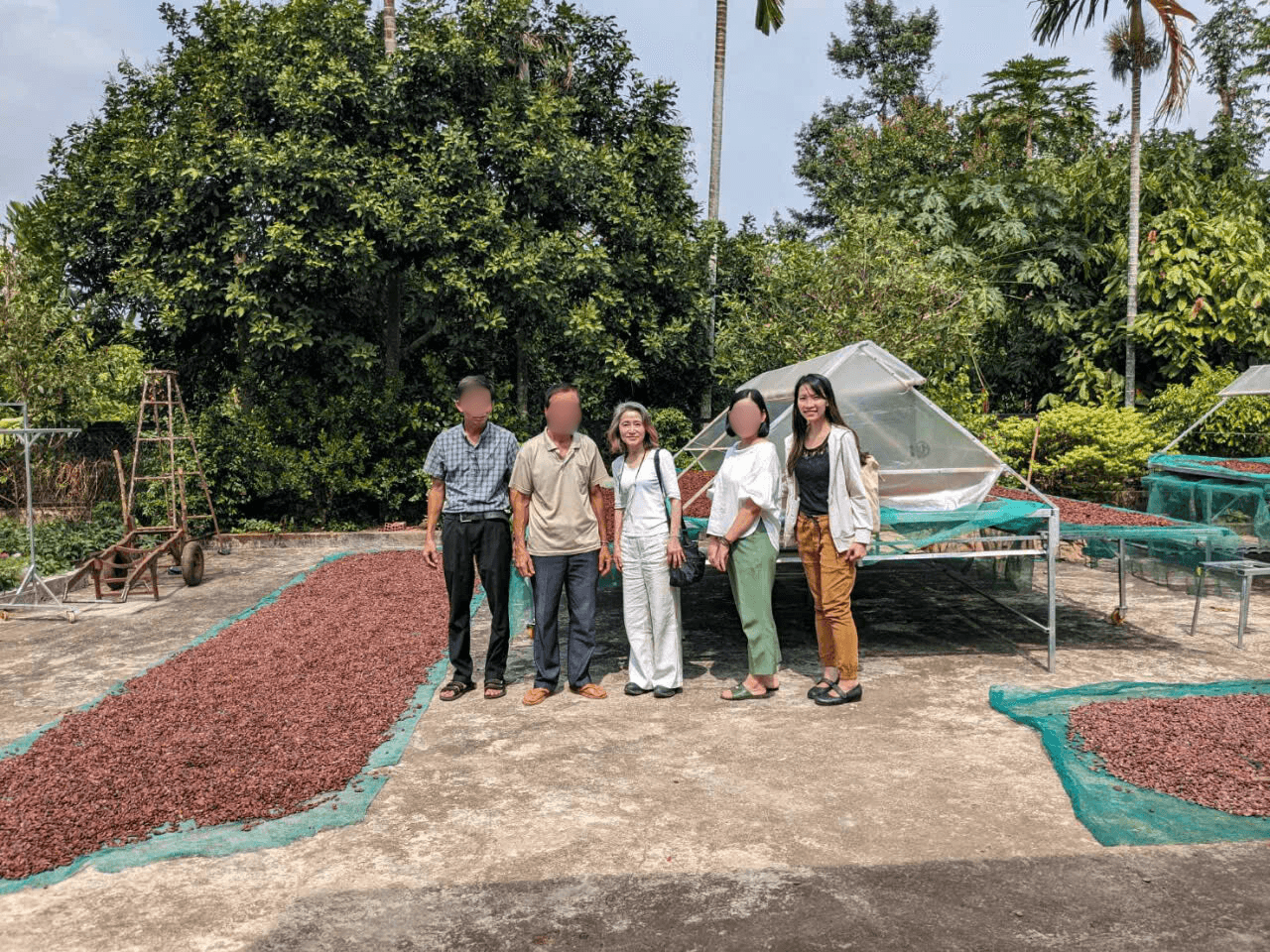
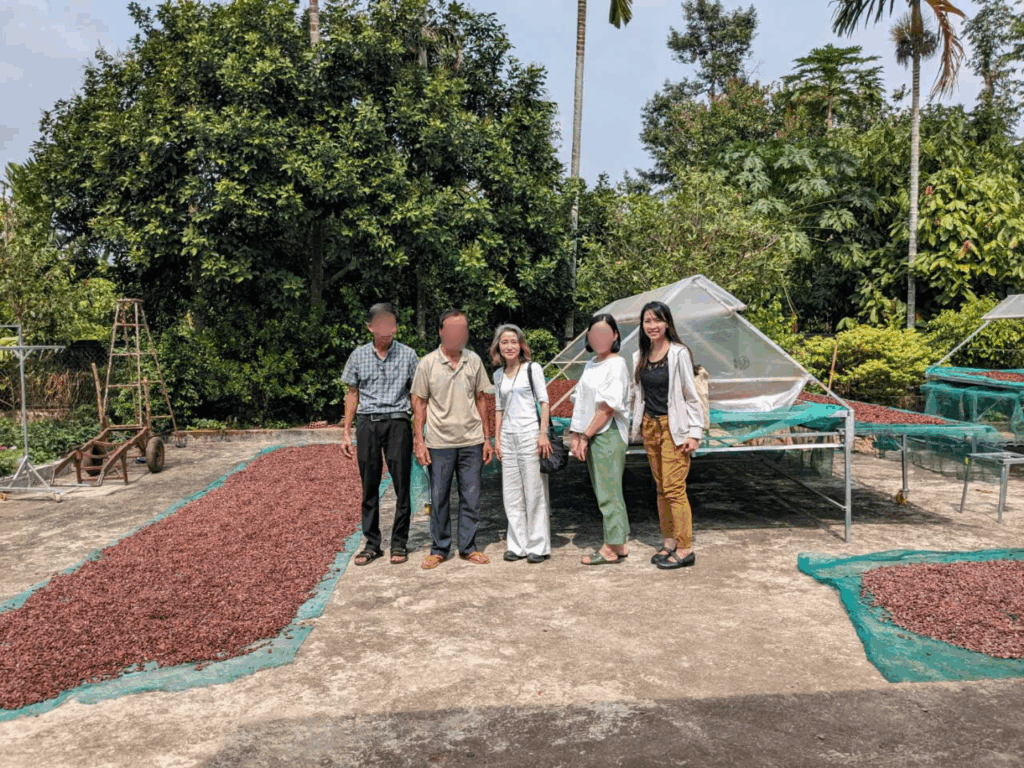
Table of Contents
- The Challenge of Creating Sustainable Value Through the "Bean to Bar" Model
- Challenges and Possibilities Surrounding Vietnamese Cacao
- The Project's Objectives and SOLARA & CO's Approach
- Local Realities That Conventional Market Research Cannot Capture
- Findings: Challenges and Opportunities Coexisting
- Value as a Real-World Example of Vietnam Market-Entry Support
- Conclusion: Vietnam Market Research Enters the Era of "Field-First"
The Challenge of Creating Sustainable Value Through the "Bean to Bar" Model
As more and more consumers around the world become discerning about chocolate quality, the production philosophy known as "Bean to Bar" is attracting attention. Amid this trend, a movement to re-evaluate Vietnamese cacao — known for its high quality — has begun. Drawing on a case of Vietnam market research and market-entry support carried out by SOLARA & CO, this article explores how the added value of Vietnamese cacao can be unlocked through the "Bean to Bar" model.
Challenges and Possibilities Surrounding Vietnamese Cacao
Vietnam is widely known as a coffee-producing country, but in fact it also holds great potential in cacao production. In several provinces of the south-central region in particular, flavorful cacao beans are produced, and cases of them earning recognition at international competitions are increasing.
However, awareness of cacao within Vietnam remains low, and there are challenges in that the market is underdeveloped and branding is insufficient. Even when farmers grow high-quality beans, the beans are not traded at commensurate prices, leaving sustainable production a continuing difficulty.
The Project's Objectives and SOLARA & CO's Approach
In this project, we conducted research and provided support around the following three pillars.
① Market Potential Research
First, to grasp awareness of and demand for high-quality cacao in the Vietnamese market, we conducted interviews with specialty chocolate shops and exporters in urban areas, delving into cacao consumption trends and export needs.
② Analysis of Supply Chain Challenges
Next, we surveyed the entire supply chain, from the production-area level through processing and distribution. In particular, a lack of coordination between farmers and companies and the inefficiency of intermediate distribution came to light. This brought into relief the need to review the entire value chain.
③ Examining a Sustainable Business Model
Finally, we assessed whether a mechanism directly linking farmers to consumers through the "Bean to Bar" model would be effective. Taking Japan's craft chocolate market as a reference, we explored the feasibility of a model that maximizes the added value of Vietnamese cacao.
Local Realities That Conventional Market Research Cannot Capture
Although it is easy to say "Vietnam market research," a quantitative approach relying solely on databases and government statistics proved insufficient. In this project, we adopted multifaceted approaches such as the following:
・On-site visits to five major producing provinces (Dak Lak, Binh Phuoc, Dong Nai, Lam Dong, Tien Giang)
・Interviews with farmers, companies, and local governments
・Hearings with regional processors and local chocolate brands
・Assessment of relevance to ESG investment
This enabled us to grasp the challenges and opportunities behind the surface-level numbers and to accumulate insights that can be applied to future Vietnam market-entry support.
Findings: Challenges and Opportunities Coexisting
Through the research, we obtained the following key insights:
・Challenge 1: Low Awareness and a Disconnect in Information
Within Vietnam, coffee is overwhelmingly prioritized over cacao, and the perception of "cacao = byproduct" remains deeply rooted among farmers.
・Challenge 2: Absence of Horizontal Coordination
Cross-regional producer networks are thin, leaving quality control and brand strategy inconsistent.
・Opportunity 1: Direct Linkage Through the "Bean to Bar" Model
Direct trade with Japanese, European, and American chocolate brands has the potential to improve farmers' profitability and their motivation to raise quality.
・Opportunity 2: Recognition in the Context of Sustainability and ESG
Cacao cultivation is unrelated to deforestation, making it easy to attract attention as a target of ESG investment.
Value as a Real-World Example of Vietnam Market-Entry Support
This project was not merely "research for selling a product"; it was carried out as part of Vietnam market-entry support, with a view to restructuring the entire supply chain.
The "Bean to Bar" model in particular is a mechanism that directly connects consumers and producers and shares added value — carrying a social significance that goes beyond a mere business model. Going forward, SOLARA & CO plans to continue providing support such as the following:
・Support in matchmaking with local partner companies
・Support in building brand strategy and storytelling
・Support in opening sales channels into the Japanese and Asian markets
・Support in proposing projects under ESG management
Conclusion: Vietnam Market Research Enters the Era of "Field-First"
This case study once again demonstrates the importance, in Vietnam market research and market-entry support, of getting at "the essence of the local reality that data alone cannot reveal." Without an understanding of the market's depth, stakeholders' enthusiasm, and the cultural background, building a sustainable business is difficult.
At SOLARA & CO, drawing on insights accumulated through diverse projects in Vietnam, we provide strategic and practical market-entry support. If you are considering developing business in the Vietnamese market, please feel free to consult with us!